Showing posts with label Europe - Italy. Show all posts

Tuesday, June 24, 2025

Sardinia island - Italy

 A beautiful island in the Mediterranean SeaSardinia is the second-largest island in the Mediterranean Sea, after Sicily, and one of the twenty regions of Italy. It is located west of the Italian Peninsula, north of Tunisia and south of the French island of Corsica. It has over 1.5 million inhabitants as of 2025.

It is one of the five Italian regions with some degree of domestic autonomy being granted by a special statute. Its official name, Autonomous Region of Sardinia, is bilingual in Italian and Sardinian: Regione Autonoma della Sardegna / Regione Autònoma de Sardigna. It is divided into four provinces and a metropolitan city. Its capital (and largest city) is Cagliari.

Sardinia's indigenous language and Algherese Catalan are referred to by both the regional and national law as two of Italy's twelve officially recognized linguistic minorities, albeit gravely endangered, while the regional law provides some measures to recognize and protect the aforementioned as well as the island's other minority languages (the Corsican-influenced Sassarese and Gallurese, and finally Tabarchino Ligurian).

Owing to the variety of Sardinia's ecosystems, which include mountains, woods, plains, stretches of largely uninhabited territory, streams, rocky coasts, and long sandy beaches, Sardinia has been metaphorically described as a micro-continent.

Sardinia, or in Italian 'Sardegna', is not a mainstream Mediterranean destination but a sophisticated Italian island. With over 1,800km of unspoilt coastline, it is renowned for beautiful beaches, turquoise sea and fascinating rock formations.

In the modern era, many travellers and writers have extolled the beauty of its long-untouched landscapes, which retain vestiges of the Nuragic civilization. In the picture, Anne Marie Nicolaïdès.

The name Sardinia has pre-Latin roots. It comes from the pre-Roman ethnonym *s(a)rd-, later romanised as sardus (feminine sarda). It makes its first appearance on the Nora Stone, where the word ŠRDN, or *Šardana, testifies to the name's existence when the Phoenician merchants first arrived.

According to Timaeus, one of Plato's dialogues, Sardinia (referred to by most ancient Greek authors as Sardṓ, Σαρδώ) and its people as well might have been named after a legendary woman called Sardṓ (Σαρδώ), born in Sardis (Σάρδεις), capital of the ancient Kingdom of Lydia. In classical antiquity, Sardinia was called a number of names besides Sardṓ (Σαρδώ) or Sardinia, like Ichnusa (the Latinised form of the Greek Ἰχνοῦσσα), Sandaliotis (Σανδαλιῶτις) and Argyrophleps (Αργυρόφλεψ).

The Cathedral of Cagliari, also known as Cattedrale di Santa Maria e Santa Cecilia, is a Roman Catholic cathedral in Cagliari, Sardinia, Italy. It is dedicated to the Virgin Mary and Saint Cecilia and serves as the seat of the Archbishop of Cagliari. The cathedral has a rich history, with construction beginning in the 13th century in a Pisan-Romanesque style, later undergoing Baroque renovations in the 17th and 18th centuries, and finally receiving its current Neo-Romanesque facade in the 1930s.

Sardinia is so much more than just beaches—it's a destination famous for its ancient sites, mouthwatering cuisine and rich cultural experiences. This Mediterranean gem is a land of contrasts, where rugged mountains give way to pristine shores and centuries-old traditions thrive alongside lively coastal towns.

 It is generally high and rocky, with long, relatively straight stretches, outstanding headlands, wide, deep bays, rias, and inlets with various smaller islands. The island has an ancient geoformation and, unlike Sicily and mainland Italy, is not earthquake-prone. The first language of Sardinia is Italian, although the Sardinian language, Sardo, is still widely spoken. A remarkably rich language, Sardo varies greatly from area to area, even from village to village, with Latin, Arabic, Spanish and Catalan influences reflecting the turbulence of the island's past.

An ancient city with a long history, Cagliari has seen the rule of several civilisations. Under the buildings of the modern city there is a continuous stratification attesting to human settlement over the course of some five thousand years, from the Neolithic to today. 

 Historical sites include the prehistoric Domus de Janas, partly damaged by cave activity, a large Carthaginian era necropolis, a Roman era amphitheatre, a Byzantine Basilica, three Pisan-era towers and a strong system of fortification that made the town the core of Spanish Habsburg imperial power in the western Mediterranean Sea. 

 Its natural resources have always been its sheltered harbour, the often powerfully fortified hill of Castel di Castro, the modern Casteddu, the salt from its lagoons, and, from the hinterland, wheat from the Campidano plain and silver and other ores from the Iglesiente mines.

Many wished to conquer Sardinia; the Phoenicians, the Punic and Byzantine empires, the Romans, the Pisans, and the Aragonese. The presence of these cultures can be clearly seen in the city’s architecture; the Town Hall, for example, is a mix of Spanish Gothic and Italian Art Noveau, while in other places of the city medieval towers and Baroque churches can be admired.

Cagliari embodies Sardinia’s lust for life in all its facets. With its winding alleys, grand architecture and idyllic location skirted by the sea, the island’s capital city is easy to fall in love with. Whether you want to shop till you drop or relax on Poetto beach, Cagliari is one of the most beautiful spots in Sardinia.

Whether you want to shop till you drop or relax on Poetto beach, Cagliari is one of the most beautiful spots in Sardinia. A climb to its imposing fort reveals breathtaking views of the old town with its subtly morbid charm and many of the city’s impressive buildings – the Cathedral of Santa Maria, the Elephant Tower and the Tower of San Pancrazio punctuate the landscape of subtropical gardens and mysterious alleyways. 

The flag of Sardinia, also referred to as the Four Moors, represents and symbolizes the island of Sardinia (Italy) and its people. It was also the historical flag and coat of arms of the Aragonese, then Spanish, and later Savoyard Kingdom of Sardinia. It was first officially adopted by the autonomous region in 1950 with a revision in 1999, describing it as a "white field with a red cross and a bandaged Moor's head facing away from the hoist (the edge close to the mast) in each quarter".

The flag is composed of the St George's Cross and four heads of Moors, which in the past may not have been forehead bandaged but blindfolded and turned towards the hoist. But already well-preserved pictures from the 16th century clearly show a forehead bandage (see gallery below). The most accepted hypothesis is that the heads represented the heads of Moorish princes defeated by the Aragonese, as for the first time they appeared in the 13th-century seals of the Crown of Aragon – although with a beard and no bandage, contrary to the Moors of the Sardinian flag, which appeared for the first time in a manuscript of the second half of the 14th century.

Orgosolo is a municipality located in the Province of Nuoro, in the autonomous region of Sardinia, at about 110 kilometres north of Cagliari and about 13 kilometres south of Nuoro. The municipality is famous for its murals. These political paintings can be found on walls all over Orgosolo. Since about 1969, the murals reflect different aspects of Sardinia's political struggles but also deal with international issues.

Orgosolo is known for its protest painting; the politically charged wall paintings colour the centre of the town. With more than a hundred different pieces, every nook, cranny, alley or corner in this dwelling has its own work of art. Vittorio De Seta's movie Banditi a Orgosolo (1961) focuses on the past way of life in central Sardinia and on the phenomenon of "Banditry" in the region. At one time Orgosolo was known as the "village of the murderers" due to its high crime rate. Bandits of the surrounding mountains used the church door to post notices of death sentence passed on their enemies.

In the heart of Barbagia lies Orgosolo, a pre-Nuragic commune in the province of Nuoro, at an altitude of about 600 metres. Its hilly and mountainous terrain, with the exception of the Locoe valley, allows views to reach beyond the Baronìe sub-region and, on clear days, as far as the peaks of Mount Limbara in Gallura. We recommend visiting the Gennargentu National Park and the Supramonte, a mountainous plateau with karst terrain, caves, sinkholes and gorges. You will be amazed by the spectacular Gorropu Canyon, a deep gorge with 400-metre vertical walls carved by the Flumineddu river. 

A cradle of archaic traditions, Orgosolo reveals a deep bond with its roots: it is the land of the Canto a Tenore (Polyphonic folk singing), proclaimed a UNESCO World Heritage Site. The most famous things in this village are the 150+ murals. But did you know it is also home to one of UNESCO’s intangible world heritages? And have you ever heard about its centuries-old tradition of silkworm farming?

Cagliari doesn’t only offer all of the above…if you visit this fantastic city don’t forget to try its typical cuisine, which includes burrida, fregula con cocciula, sa cassola, malloreddus and is pardulas. No further explanation on these dishes and their ingredients…you’re invited to visit Cagliari and personally discover the scents, flavors, and origin of these typical delicacies!

Cagliari boasts a strategic position in the Mediterranean and offers, amongst many other tourist attractions, a castle, a cathedral, the harbor, the Elephant Tower, the Archeological Museum, a Roman Amphitheater, the San Benedetto Market, the Bastion of Saint Remy and the pink flamingos of Molentargius.
Ancient Olbia (Ancient Greek: Ὄλβια, "the happy" or "the prosperous") was founded around 647 BC; it is also called "Sardinian Olbia" to distinguish it from the five other Greek cities called "Olbia". In Roman times, Sardinian Olbia covered 2.5 hectares with a square plan and a barracks which was originally located in this city, surrounded by a rampart. Inside, two large perpendicular streets divided it into 4 stone districts, with copper roofs. In modern times, Olbia is called Terranova and then Terranova Pausania. In 1939, the Mussolini regime changed its name to Olbia. This change was not reversed when the regime fell. (In the picture Pascal Nicolaïdès).


Saturday, June 14, 2025

Olbia, Sardinia - Italy

 By Pascal NicolaïdèsPanoramic view of Olbia port and yacht marina area with piers and Tyrrhenian Sea shore with Cabu Abbas hills in background.

Πανοραμική θέα του λιμανιού της Όλμπια και της μαρίνας σκαφών αναψυχής με προβλήτες και την ακτή του Τυρρηνικού Πελάγους με τους λόφους Cabu Abbas στο φόντο.

Olbia is a charming city located on the northeast coast of Sardinia, Italy. Known for its beautiful beaches, historical sites, and delicious food, it's a popular tourist destination. Visitors can explore the ancient ruins, enjoy the local cuisine, and take part in various outdoor activities. 

Η Όλμπια είναι μια γοητευτική πόλη που βρίσκεται στη βορειοανατολική ακτή της Σαρδηνίας στην Ιταλία. Γνωστή για τις όμορφες παραλίες, τα ιστορικά αξιοθέατα και το νόστιμο φαγητό της, είναι ένας δημοφιλής τουριστικός προορισμός. Οι επισκέπτες μπορούν να εξερευνήσουν τα αρχαία ερείπια, να απολαύσουν την τοπική κουζίνα και να συμμετάσχουν σε διάφορες υπαίθριες δραστηριότητες.Despite its popularity, Olbia retains a laid-back atmosphere that makes it a relaxing getaway.

 Παρά τη δημοτικότητά της, η Όλμπια διατηρεί μια χαλαρή ατμόσφαιρα που την καθιστά ένα χαλαρωτικό μέρος για απόδραση.Olbia Sardinian is a city and commune of 61,000 inhabitants in the Italian insular province of Sassari in northeastern Sardinia, Italy, in the historical region of Gallura.

Η Όλμπια της Σαρδηνίας είναι πόλη και κοινότητα 61.000 κατοίκων στην ιταλική νησιωτική επαρχία Σάσσαρι στη βορειοανατολική Σαρδηνία της Ιταλίας, στην ιστορική περιοχή Γκαλούρα.

Although the name is of Greek origin, due to the Greek presence during the seventh century B.C., the city of Olbia was first settled either by the Nuragics or by Phoenicians, according to the archaeological findings.

Αν και το όνομα είναι ελληνικής προέλευσης, λόγω της ελληνικής παρουσίας κατά τον έβδομο αιώνα π.Χ., η πόλη της Ολβίας κατοικήθηκε αρχικά είτε από τους Νουραγικούς είτε από Φοίνικες, σύμφωνα με τα αρχαιολογικά ευρήματα.

Look beyond its industrial outskirts and you'll find a fetching city with a historic centre crammed with boutiques, wine bars and cafe-rimmed piazzas. Olbia is a refreshingly authentic and affordable alternative to the purpose-built resorts stretching to the north and south.
Κοιτάξτε πέρα ​​από τα βιομηχανικά της προάστια και θα βρείτε μια γοητευτική πόλη με ένα ιστορικό κέντρο γεμάτο με μπουτίκ, wine bar και πλατείες με καφέ. Η Όλμπια είναι μια αναζωογονητικά αυθεντική και οικονομική εναλλακτική λύση στα ειδικά κατασκευασμένα θέρετρα που εκτείνονται προς τα βόρεια και τα νότια.
Olbia is the lively metropolis in the north-east of Sardinia with idyllic beaches. Just like the main beach Pittulongu, countless idyllic beaches in the Gulf of Olbia await to stun visitors with white sand and crystal-clear water.

Η Όλμπια είναι η ζωντανή μητρόπολη στα βορειοανατολικά της Σαρδηνίας με ειδυλλιακές παραλίες. Όπως και η κεντρική παραλία Πιτουλόνγκου, αμέτρητες ειδυλλιακές παραλίες στον κόλπο της Όλμπια περιμένουν να εντυπωσιάσουν τους επισκέπτες με τη λευκή άμμο και τα κρυστάλλινα νερά.

Olbia's Old Town offers a pleasant and memorable shopping experience, housing over 100 boutique shops in its historical buildings, open squares and narrow alleyways, also crowded with restaurants and cafes. (In the photo: Anne Marie and Pascal Nicolaïdès).

Η Παλιά Πόλη της Όλμπια προσφέρει μια ευχάριστη και αξέχαστη εμπειρία αγορών, φιλοξενώντας πάνω από 100 μπουτίκ στα ιστορικά της κτίρια, τις ανοιχτές πλατείες και τα στενά σοκάκια, γεμάτα επίσης με εστιατόρια και καφετέριες. (Στη φωτογραφία το ζεύγος Άννη Μαρί και Πασκάλ Νικολαΐδης).With excellent ferry connections to mainland Italy and easy access to the Costa Smeralda, Olbia is the perfect budget-friendly base to explore Sardinia's classy northeastern coast. Golfo Aranci: This peaceful seaside village is known for its crystal-clear waters and stunning natural beauty.

Με εξαιρετικές συνδέσεις με φέρι προς την ηπειρωτική Ιταλία και εύκολη πρόσβαση στην Κόστα Σμεράλντα, η Όλμπια αποτελεί την ιδανική οικονομική βάση για να εξερευνήσετε την αριστοκρατική βορειοανατολική ακτή της Σαρδηνίας. Γκόλφο Αράντσι: Αυτό το ήσυχο παραθαλάσσιο χωριό είναι γνωστό για τα κρυστάλλινα νερά του και την εκπληκτική φυσική ομορφιά του.

Tourism in Sardinia is one of the fastest growing sectors of the regional economy. Pascal Nicolaïdès enjoys the cool water of the pool.

Ο τουρισμός στη Σαρδηνία είναι ένας από τους ταχύτερα αναπτυσσόμενους τομείς της περιφερειακής οικονομίας. Ο Pascal Nicolaïdès απολαμβάνει το δροσερό νερό της πισίνας.


Thursday, December 21, 2023

When France meets Italy

French students in an exchange program in Italy
Γάλλοι μαθητές σε πρόγραμμα ανταλλαγής μαθητών στην Ιταλία
Cinecittà Studios, is a large film studio in Rome, Italy. With an area of 400,000 square metres, it is the largest film studio in Europe, and is considered the hub of Italian cinema. The studios were constructed during the Fascist era as part of a plan to revive the Italian film industry.
Τα Στούντιο Cinecittà, είναι ένα μεγάλο κινηματογραφικό στούντιο στη Ρώμη της Ιταλίας. Με έκταση 400.000 τετραγωνικών μέτρων, είναι το μεγαλύτερο κινηματογραφικό στούντιο στην Ευρώπη και θεωρείται το κέντρο του ιταλικού κινηματογράφου. Τα στούντιο κατασκευάστηκαν κατά τη διάρκεια της φασιστικής εποχής ως μέρος ενός σχεδίου για την αναζωογόνηση της ιταλικής κινηματογραφικής βιομηχανίας.
The Colosseum amphitheatre in the centre of the city of Rome, Italy. It is the largest ancient amphitheatre ever built, and is still the largest standing amphitheatre in the world, despite its age. Emma Nicolaïdès, the granddaughter of Anne Marie & Pascal Nicolaïdès, from France with the rich Greek roots. (second from right).
Το Κολοσσαίο ένα αμφιθέατρο στο κέντρο της πόλης της Ρώμης, στην Ιταλία. Είναι το μεγαλύτερο αρχαίο αμφιθέατρο που χτίστηκε ποτέ, και εξακολουθεί να είναι το μεγαλύτερο αμφιθέατρο στον κόσμο, παρά την ηλικία του. Η Έμμα Νικολαΐδη, η εγγονή της Άννης Μαρί και του Πασκάλ Νικολαΐδη, από τη Γαλλία με τις πλούσιες ελληνικές ρίζες (δεύτερη από δεξιά).

Students from France in an exchange program with Italy. Beautiful and happy faces.
Μαθητές από τη Γαλλία σε πρόγραμμα ανταλλαγής με την Ιταλία. Όμορφα και χαρούμενα πρόσωπα.

Gregory the Illuminator was the founder and first official head of the Armenian Apostolic Church. He converted Armenia from Zoroastrianism to Christianity in the early fourth century, making Armenia the first state to adopt Christianity as its official religion. Statue of Saint Gregory the Illuminator in St. Peter's Basilica. Rome, Italy.
Ο Γρηγόριος ο Φωτιστής ήταν ο ιδρυτής και ο πρώτος επίσημος επικεφαλής της Αρμενικής Αποστολικής Εκκλησίας. Μετέτρεψε την Αρμενία από τον Ζωροαστρισμό στον Χριστιανισμό στις αρχές του τέταρτου αιώνα, κάνοντας την Αρμενία το πρώτο κράτος που υιοθέτησε τον Χριστιανισμό ως επίσημη θρησκεία. Άγαλμα του Αγίου Γρηγορίου του Φωτιστή στη Βασιλική του Αγίου Πέτρου. Ρώμη, Ιταλία.

The Trevi Fountain is an 18th-century fountain in the Trevi district in Rome, Italy, designed by Italian architect Nicola Salvi and completed by Giuseppe Pannini in 1762 and several others.
Η Φοντάνα ντι Τρέβι είναι ένα σιντριβάνι του 18ου αιώνα στην περιοχή Τρέβι στη Ρώμη, Ιταλία, σχεδιασμένο από τον Ιταλό αρχιτέκτονα Nicola Salvi και ολοκληρώθηκε από τον Τζουζέπε Πανίνι το 1762 και αρκετούς άλλους.
Rome is the capital city of Italy. Rome is often referred to as the City of Seven Hills due to its geographic location, and also as the "Eternal City".
Η Ρώμη είναι η πρωτεύουσα της Ιταλίας. Η Ρώμη αναφέρεται συχνά ως η πόλη των επτά λόφων λόγω της γεωγραφικής της θέσης και επίσης ως η «Αιώνια Πόλη».

Sunday, November 6, 2022

Palermo, Sicily - Italy

Part I' Μέρος Α'
Παλέρμο μια ιστορική πόλη και πρωτεύουσα της Σικελίας στην Ιταλία
The Sicilian capital, called the “Kingdom of the sun” by invading Normans in the 12th century, has been a cultural melting pot since Phoenicians and Greeks fought over it in the 5th and 6th centuries BC.
Η πρωτεύουσα της Σικελίας, που ονομάστηκε «Βασίλειο του ήλιου» από την εισβολή των Νορμανδών τον 12ο αιώνα, ήταν ένα πολιτιστικό χωνευτήρι από τότε που Φοίνικες και Έλληνες πολέμησαν για αυτήν τον 5ο και 6ο αιώνα π.Χ.
Palermo is a place of mystery, where reality often outperforms the traveller’s imagination and preconceived stereotypes.
Το Παλέρμο είναι ένας τόπος μυστηρίου, όπου η πραγματικότητα συχνά ξεπερνά τη φαντασία του ταξιδιώτη και τα προκατασκευασμένα στερεότυπα.
Sicily and its notable city of Palermo have been at the crossroads of civilizations for thousands of years.
Η Σικελία και η αξιοσημείωτη πόλη της, το Παλέρμο, βρίσκονται στο σταυροδρόμι των πολιτισμών για χιλιάδες χρόνια.
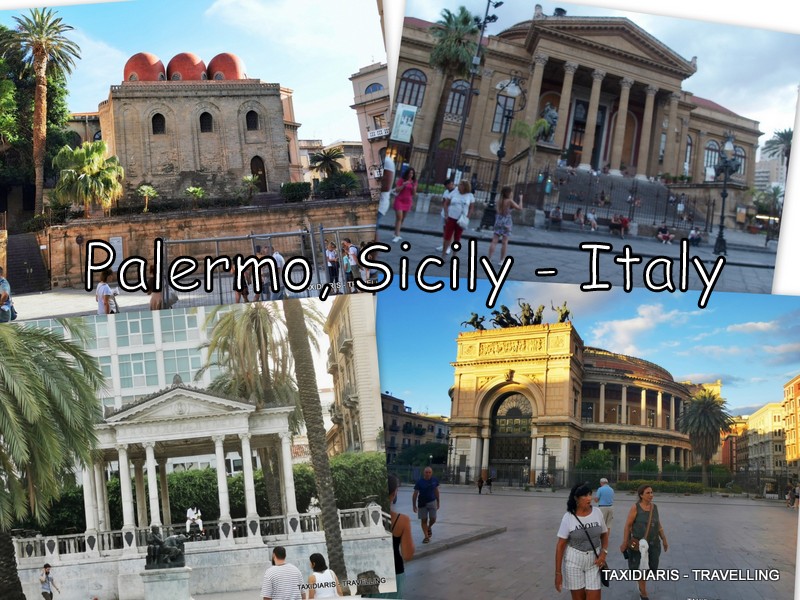
Teatro Massimo on Piazza Verdi, one of the largest opera houses in Europe, was opened in 1897.Is considered by many as the most beautiful building in the city.
Το Θέατρο Μασσίνο στην πλατεία Βέρτι, μια από τις μεγαλύτερες όπερες στην Ευρώπη, άνοιξε το 1897. Θεωρείται από πολλούς ως το πιο όμορφο κτίριο της πόλης.

The largest opera house in Italy, Teatro Massimo is the pride of the city. The theater was intended to impress visitors at every opportunity, beginning with its physical appearance. The architecture includes elements of the Greek temples at South Italy.
Η μεγαλύτερη όπερα στην Ιταλία, το Θέατρο Μασσίνο είναι το καμάρι της πόλης. Το θέατρο είχε σκοπό να εντυπωσιάζει τους επισκέπτες με κάθε ευκαιρία, ξεκινώντας από τη φυσική του εμφάνιση. Η αρχιτεκτονική περιλαμβάνει στοιχεία των ελληνικών ναών της Κάτω Ιταλίας.

The Teatro Massimo Opera house in Piazza Verdi, taken at night by Elena Salata. She says that: It’s one of the filming locations for a scene in the “Godfather” film.
Η Όπερα του Θεάτρου Μασσίνο στην πλατεία Βέρτι, τραβηγμένη τη νύχτα. Μία από τις τοποθεσίες γυρισμάτων για τις ανάγκες της ταινίας «Νονός».
Xenis Xenofontos, Phivos Nicolaides, Matteo Miano & Vasiliki Vourda, in front of the magnificent building of Teatro Massimo a landmark of the city. Even just climbing the steep steps outside, you know you’re visiting somewhere special.
Ο Ξενής Ξενοφώντος, Φοίβος Νικολαΐδης, Ματέο Μιάνο & Βασιλική Βούρδα μπροστά στο καταπληκτικό κτίριο του θεάτρου Μάσσιμο ένα ορόσημο της πόλης. Ακόμη και αν ανεβαίνοντας τα απότομα σκαλοπάτια έξω, ξέρετε ότι επισκέπτεστε ένα ιδιαίτερο μέρος.
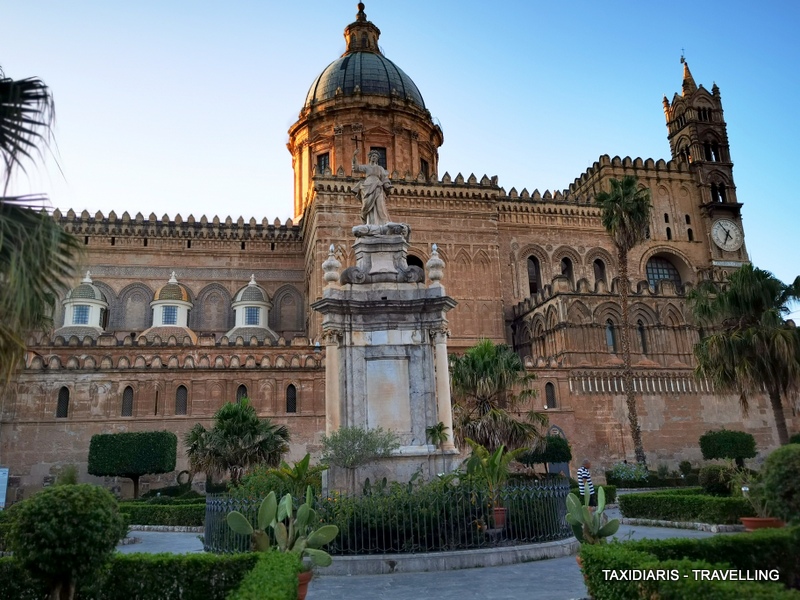
One of the most eye-catching buildings in Palermo is the UNESCO-listed Palermo Cathedral.
Ένα από τα πιο εντυπωσιακά κτίρια της πόλης είναι ο καθεδρικός ναός του Παλέρμο που έχει περιληφθεί στον κατάλογο της UNESCO.
The Palermo Cathedral is the most important place of worship in the city. While the size of Palermo Cathedral is definitely noteworthy, it’s hard not to focus on the building’s distinctive look. 
Ο καθεδρικός ναός του Παλέρμο είναι ο πιο σημαντικός τόπος λατρείας της πόλης. Αν και το μέγεθος του καθεδρικού ναού του Παλέρμο είναι σίγουρα αξιοσημείωτο, είναι δύσκολο να μην επικεντρωθείς στην ξεχωριστή όψη του.
The cathedral has been expanded over the years, but its east exterior still retains the original Norman character. The cathedral has seen the coronation of kings and has numerous tombs of kings within it.
Ο καθεδρικός ναός επεκτάθηκε με τα χρόνια, αλλά το ανατολικό εξωτερικό του εξακολουθεί να διατηρεί τον αρχικό νορμανδικό χαρακτήρα. Ο καθεδρικός ναός έχει δει τη στέψη των βασιλιάδων και έχει πολλούς τάφους βασιλέων στο εσωτερικό του.
It is likely to have been built on the foundation of an earlier Byzantine basilica that had been turned into a mosque by the Saracens.
Πιθανότατα να χτίστηκε στα θεμέλια παλαιότερης βυζαντινής βασιλικής που είχε μετατραπεί σε τζαμί από τους Σαρακηνούς.
A blend of all sorts of architectural styles, it’s seen many additions since the Normans started it in 1185. Somehow though the Norman, Moorish, Gothic and Baroque exterior elements combine to great effect.
Ένας συνδυασμός όλων των ειδών αρχιτεκτονικών στυλ, έχει δει πολλές προσθήκες από τότε που το ξεκίνησαν οι Νορμανδοί το 1185. Κατά κάποιο τρόπο, τα νορμανδικά, μαυριτανικά, γοτθικά και μπαρόκ εξωτερικά στοιχεία συνδυάζονται με εξαιρετικό αποτέλεσμα.
The magnificent building of the Politeama Garibaldi theater is the headquarters of the Orchestra Sinfonica Siciliana.
Το υπέροχο κτίριο του Θεάτρου Πολυθέαμα Γαριβάλδι είναι η έδρα της συμφωνικής Ορχήστρας της Σικελίας.
Statue of the Sicilian politician, diplomat, and patriotic activist Ruggiero Settimo (1778-1863) in front of Teatro Politeama Garibaldi, Palermo.
Το άγαλμα του Σικελού πολιτικού, διπλωμάτη και πατριώτη ακτιβιστή Ruggiero Settimo (1778-1863) μπροστά από το Θέατρο Πολυθέαμα Γαριβάλδι στο Παλέρμο.
Statue of Carlo Cottone, prince of Castelnuovo, (1756 - 1829) was a Sicilian politician, known as one of the main advocates of the Sicilian Constitution of 1812.
Το άγαλμα του Carlo Cottone (1756 - 1829) ήταν Σικελός πολιτικός, γνωστός ως ένας από τους κύριους υποστηρικτές του Συντάγματος της Σικελίας του 1812.
Palermo is an ancient city boasting a history of over 2,700 years old and was originally founded by the Phoenicians in 734 BC. Later on, it came under the sway of Carthage and was influenced by ancient Greeks.
Το Παλέρμο είναι μια αρχαία πόλη με ιστορία άνω των 2.700 ετών και ιδρύθηκε αρχικά από τους Φοίνικες το 734 π.Χ. Αργότερα, πέρασε στην κυριαρχία της Καρχηδόνας και επηρεάστηκε από τους αρχαίους Έλληνες.
It is impossible to describe the Sicilian capital without noting its contrasts: elegance and decadence, light and shadow, rich and poor, metropolitan and provincial, joy and sorrow, perfumes and stenches, Mafia and Anti-Mafia.
Είναι αδύνατο να περιγράψει κανείς την πρωτεύουσα της Σικελίας χωρίς να σημειώσει τις αντιθέσεις της: κομψότητα και παρακμή, φως και σκιά, πλούτος και φτώχεια, μητρόπολη και επαρχιακή, χαρά και λύπη, αρώματα και δυσωδίες, μαφία και αντι-μαφία.
On the occasion of the signing of the Reagan - Gorbachev treaty for elimination of nuclear weapons (1987), the municipal administration commemorates an important day of peace with this monument.
Με αφορμή την υπογραφή της συνθήκης Ρήγκαν - Γκορμπατσόφ, για περιορισμό των πυρηνικών όπλων (1987), το δημοτικό συμβούλιο της πόλης τίμησε τη σημαντική ημέρα ειρήνης με αυτό το μνημείο.
Gorbachev - Reagan    -    (1987)   Γκορμπατσόφ - Ρήγκαν
The grandiose Piazza Pretoria, also known as Piazza della Vergogna, the square of shame, for the thoroughly naked statues of nymphs, tritons and leaping river gods (without veils) adorning the magnificent circular fountain in front of the City Hall.
Η μεγαλειώδης πλατεία Πραιτώρια γνωστή και ως πλατεία της ντροπής, για τα εντελώς γυμνά αγάλματα των νυμφών, των τριτώνων και των θεών του ποταμού που αναπηδούν (χωρίς πέπλα) και κοσμούν το υπέροχο κυκλικό σιντριβάνι μπροστά από το Δημαρχείο.
Fontana Pretoria (1554-55), the impressive work of art on Piazza Pretoria, attracts the interest of all visitors
Το σιντριβάνι Πραιτώρια (1554-55), ένα εντυπωσικό έργο τέχνης στην πλατεία Πραιτώριας, προσελκύει το ενδιαφέρον όλων των επισκεπτών.

Fontana Pretoria is a spectacular fountain located in the heart of the historic centre of Palermo, in the square with the same name. The fountain is decorated with sculptures of the Twelve Olympians and other mythological and allegorical figures.
Η Κρήνη Πραιτώρια είναι ένα εντυπωσιακό σιντριβάνι που βρίσκεται στην καρδιά του ιστορικού κέντρου του Παλέρμο, στην ομώνυμη πλατεία. Το σιντριβάνι είναι διακοσμημένο με γλυπτά των Δώδεκα Ολυμπίων θεών και άλλες μυθολογικές και αλληγορικές μορφές.
The Church of Santa Maria dell’Ammiraglio, or Martorana, is one of the most fascinating sights on the ‘Arab-Norman Palermo itinerary. It is an extraordinary building, which tells the story of nine centuries of Sicilian art and culture.
Η εκκλησία της Santa Maria dell'Ammiraglio, ή Μαρτοράμα, είναι ένα από τα πιο συναρπαστικά αξιοθέατα στο δρομολόγιο «Αραβο-Νορμανδικό Παλέρμο». Πρόκειται για ένα εξαιρετικό κτίριο, που αφηγείται την ιστορία εννέα αιώνων τέχνης και πολιτισμού της Σικελίας.
Next to La Martorana is the Church of San Cataldo, an example of the wonderful Arabian-Norman architecture. San Cataldo is one of the sites in Palermo inscribed on the UNESCO World Heritage List. It was built in c. 1160.
Δίπλα στη στην εκκλησία Μαρτοράμα βρίσκεται η Εκκλησία του San Cataldo, ένα δείγμα της υπέροχης αραβο-νορμανδικής αρχιτεκτονικής. Είναι ένα από τα μνημεία στο Παλέρμο που έχουν συμπεριληφθεί στον Κατάλογο Παγκόσμιας Κληρονομιάς της UNESCO.
Palermo is among the cities boasting the largest number of UNESCO sites.
Το Παλέρμο είναι μεταξύ των πόλεων που διαθέτουν τον μεγαλύτερο αριθμό μνημείων και κτιρίων που συμπεριλαμβάνονται στον κατάλογο της UNESCO.
Architecture in the city reflects the city's periods of Arab, Norman, and Spanish rule.
Η αρχιτεκτονική στην πόλη αντανακλά τις περιόδους της Αραβικής, Νορμανδικής και Ισπανικής κυριαρχίας της πόλης. 

Palermo is the capital of Sicily and is one of the most popular tourist destinations for its architecture, history, climate, and culinary traditions.
Το Παλέρμο είναι η πρωτεύουσα της Σικελίας και είναι ένας από τους πιο δημοφιλείς τουριστικούς προορισμούς για την αρχιτεκτονική, την ιστορία, το κλίμα και τις γαστρονομικές παραδόσεις του.

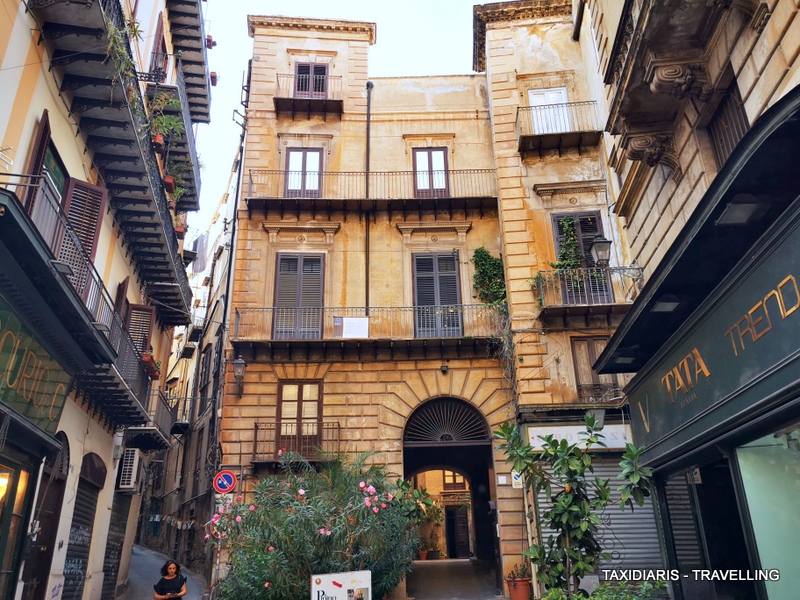
Graffiti and crumbling buildings aren’t hard to find, especially if you step outside the usual tourist trails. Take a wrong turn, and you might suddenly find yourself in a very different looking Palermo.
Τα γκράφιτι και τα ερειπωμένα κτίρια δεν είναι δύσκολο να τα βρεις, ειδικά αν βγεις έξω από τα συνηθισμένα τουριστικά μονοπάτια. Πάρτε μια λάθος στροφή και μπορεί ξαφνικά να βρεθείτε σε ένα πολύ διαφορετικό Παλέρμο.

Excellent tour guide Matteo Miano (fluent in Greek) explains in every detail about the city’s history, architecture, culture, traditions and much more.
Ο εξαιρετικός ξεναγός Ματέο Μιάνο (ελληνομαθής) εξηγεί με κάθε λεπτομέρεια την ιστορία, την αρχιτεκτονική, τον πολιτισμό, τις παραδόσεις και πολλά άλλα της πόλης.

Greeks, Carthaginians, Romans and Byzantines succeeded each other in the area until 831 AD, when the island fell under Arabian rule, the name now becoming Balarm.
Έλληνες, Καρχηδόνιοι, Ρωμαίοι και Βυζαντινοί διαδέχονταν ο ένας τον άλλον στην περιοχή μέχρι το 831 μ.Χ., όταν το νησί περιήλθε στην αραβική κυριαρχία, το όνομα πλέον έγινε Balarm.
You certainly won’t be stuck for things to do in Palermo with intriguing museums, moreish art galleries and stunning churches making up some of the top sights.
Σίγουρα δεν θα δυσκολευτείτε να κάνετε πράγματα στο Παλέρμο με ενδιαφέροντα μουσεία, πιο εντυπωσιακές γκαλερί τέχνης και εκπληκτικές εκκλησίες που αποτελούν μερικά από τα κορυφαία αξιοθέατα.
The old town of Palermo is rife with grand palaces and elegant corners that are quite impressive even if they show signs of wear and tear.
Η παλιά πόλη του Παλέρμο είναι γεμάτη με μεγάλα παλάτια και κομψές γωνιές που είναι αρκετά εντυπωσιακές ακόμα κι αν δείχνουν σημάδια φθοράς.
Palermo, the regional capital of Sicily, is one of those cities with a very distinct, almost tangible atmosphere.
Το Παλέρμο, η περιφερειακή πρωτεύουσα της Σικελίας, είναι μια από εκείνες τις πόλεις με μια πολύ ξεχωριστή, σχεδόν απτή ατμόσφαιρα.
Palermo can be quite a beautiful city to explore, especially around its historical centre.
Το Παλέρμο μπορεί να είναι μια πολύ όμορφη πόλη για εξερεύνηση, ειδικά γύρω από το ιστορικό του κέντρο.
Today Palermo is considered Sicily's cultural and tourism capital and is a favoured stop-over for Mediterranean cruises.
Σήμερα το Παλέρμο θεωρείται η πολιτιστική και τουριστική πρωτεύουσα της Σικελίας και είναι ένας αγαπημένος σταθμός για κρουαζιέρες στη Μεσόγειο.
Here we are in Sicily’s capital city, and you can already feel the authentic atmosphere that wins the hearts of everyone who sets foot there.
Εδώ βρισκόμαστε στην πρωτεύουσα της Σικελίας και μπορείτε ήδη να νιώσετε την αυθεντική ατμόσφαιρα που κερδίζει τις καρδιές όλων όσων πατούν το πόδι τους εδώ.
It is a buzzing Mediterranean centre whose one million inhabitants are a fascinating cocktail of apparently conflicting characteristics.
Είναι ένα πολυσύχναστο μεσογειακό κέντρο του οποίου το ένα εκατομμύριο κάτοικοι είναι ένα συναρπαστικό κοκτέιλ φαινομενικά αντικρουόμενων χαρακτηριστικών.
As you walk down the central aisle, it’s hard not to feel moved by the splendour and decorative beauty of the place.
Καθώς περπατάτε στον κεντρικό διάδρομο, είναι δύσκολο να μην συγκινηθείτε από τη μεγαλοπρέπεια και τη διακοσμητική ομορφιά του τόπου.
The influence of Greeks, Romans, Normans, Arabs, Spanish and other empires is evident in its architecture.
Η επιρροή Ελλήνων, Ρωμαίων, Νορμανδών, Αράβων, Ισπανικών και άλλων αυτοκρατοριών είναι εμφανής στην αρχιτεκτονική του.
Palermo is the economic powerhouse of the region and one of the most important in the south of Italy. Its economy is based on shipbuilding, iron and steel, food production and agricultural trade, but a growing sector is tourism.
Το Παλέρμο είναι η οικονομική δύναμη της περιοχής και ένα από τα σημαντικότερα στη νότια Ιταλία. Η οικονομία της βασίζεται στη ναυπηγική, το σίδηρο και το χάλυβα, την παραγωγή τροφίμων και το εμπόριο γεωργικών προϊόντων, αλλά ένας αναπτυσσόμενος τομέας είναι ο τουρισμός.
It may still be basking in the glow of being Italian Capital of Culture 2018 but the city has been a cultural melting pot since antiquity
Μπορεί ακόμα να απολαμβάνει τη λάμψη της Πολιτιστικής Πρωτεύουσας της Ιταλίας για το 2018, αλλά η πόλη ήταν ένα πολιτιστικό χωνευτήρι από την αρχαιότητα.
Sicily is famous for being one of Italy's most stunning regions and its capital, Palermo, has it all.
Η Σικελία φημίζεται ως μια από τις πιο εντυπωσιακές περιοχές της Ιταλίας και η πρωτεύουσά της, το Παλέρμο, τα έχει όλα.
Nikolas Pantazopoulos argues that: Palermo city which captivates, stupefies, and sometimes shocks visitors; it certainly isn’t an experience one forgets.
Ο Νικόλας Πανταζόπουλος υποστηρίζει ότι: Το Παλέρμο είναι μια πόλη που αιχμαλωτίζει, ζαλίζει και μερικές φορές σοκάρει τους επισκέπτες. Σίγουρα δεν είναι μια εμπειρία που ξεχνά κανείς.